
WELCOME
 Thanks for coming to visit my website. I write about science, technology, foreign affairs, and other subjects.
Follow me on Twitter: @kkakaesDrones and Aerial Observation

I edited and wrote part of a short book published by New America in July 2015 and freely available online, about how drones are being used in new ways around the world. It's meant to be useful to people who want to fly drones.The Pioneer Detectives
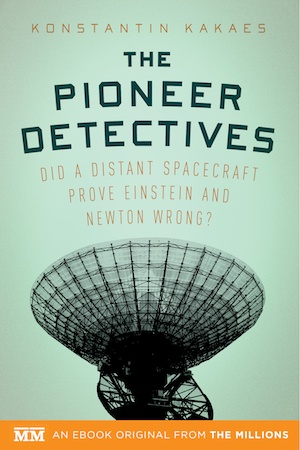
I published a short book with The Millions.
It's the story of the Pioneer Anomaly, a long-standing mystery. The book is short and fun—the length of a novella—but also, in the words of Amazon's reviewer, "powerful and sad". If you've got any curiosity about how NASA works behind the scenes or why scientists believe what they do, I think you'll enjoy the book.
It is available on Amazon as a Kindle Single and also on Apple's iBooks.Drone Wars
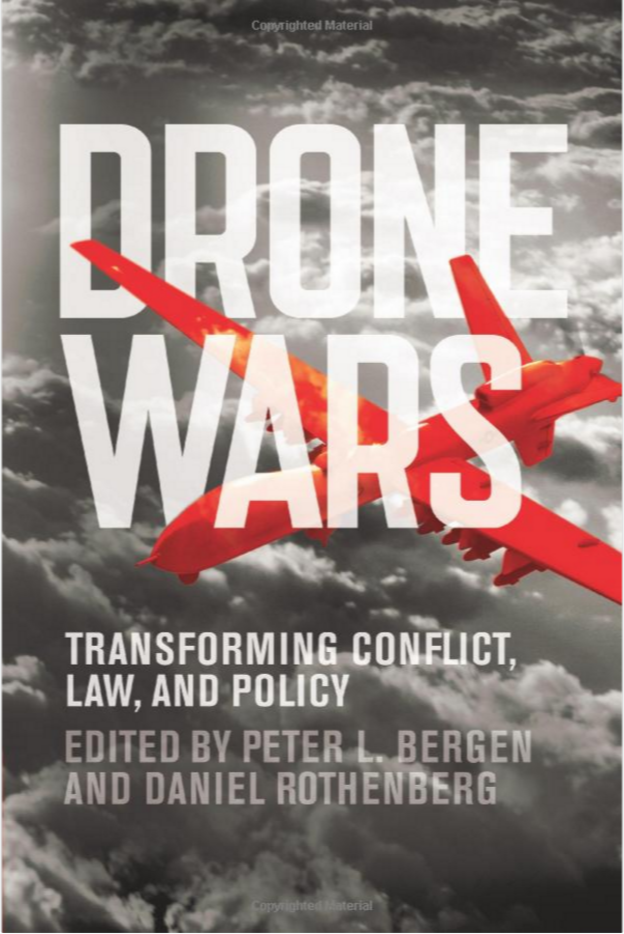
I wrote a chapter on the long history of drone technology going back to the early 20th century in this edited Cambridge University Press volume.
Regulating Persistence
19 March 2015
Why persistent surveillance must be regulated
A brief response to Obama’s call for comment on drones and privacy.
[The Economist]
clips, Drones
tags: drones, FAA, NTIA, persistence, privacy, small drones, The Economist
Beware the ‘Big Data’ Gospel
27 February 2015
More debunking of the idea that ‘data’ can always be a tool for rigorous & disinterested analysis
A follow-up to my earlier CNN article, responding to a couple of poorly reasoned critiques
[Weekly Wonk]
Reflections on the 90th Anniversary of the New Yorker
19 February 2015
On first looking into Trow’s essay
A reminiscence of the first time I read “Within the Context of No Context” and why you should read it too
[Weekly Wonk]
The FAA’s new rules on Small Drones
16 February 2015
A quick reaction to the FAA’s notice of proposed rulemaking
The new rules are tardy and incomplete but could have been much worse.
[Quartz]
clips, Drones
tags: FAA, Quartz, small drones
Alibaba’s Teabag Stunt Doesn’t Prove That Drone Delivery Works
4 February 2015
Another drone PR stunt
A Chinese companies scheme to deliver tea doesn’t mean the logistics or economics of delivery via drone will be real anytime soon.
[Slate]
clips, Drones
tags: Alibaba, Drone delivery, Slate
Why Are Drone-Makers Helping Governments Crack Down on Drones?
28 January 2015
DJI’s brute force regulation through software
The dangers of users lacking control over the devices they use, as illustrated by one drone-maker’s reaction when one of its aircraft crashed on the White House grounds.
[Slate]
clips, Drones
tags: DJI, drones, Lawrence Lessig, Phantom, Slate, software, UAVs, White House Drone
A small step backward for mankind
5 November 2014
Why America needs to embrace a culture of risk in order to build the next-generation space program.
How and why to be resilient in the face of failed spacecraft, and the loss of life.
[Foreign Policy]
Sayur Manis: Delicious, But Also Deadly, Greens From Borneo
14 August 2014
Eat too much of it raw, and it can cause lung failure
Also known as sabah veggie, and a multitude of other names, sayur manis tastes like spinach crossed with asparagus
[NPR]
clips, Food
tags: Borneo, Lung failure, Malaysia, NPR, Nutrition, Sabah, Sabah Veggie, Sayur Manis, Spinach
Book Review: ‘The Interior Circuit’ by Francisco Goldman
9 August 2014
Ka Wong Seng looks as if it fell into a Chinatown wormhole and emerged complete with roasted duck.
Review of Goldman’s memoir of Mexico City, which I think does not succeed in its aims.
[Wall Street Journal]
Book Reviews, clips, Latin America and the Caribbean, Mexican Business and Culture, Mexican Politics, Mexico
tags: Enrique Peña Nieto, Francisco Goldman, Guatemala City, Jonathan Candell, La Capital, Long Night of White Chickens, Marcelo Ebrard, memoirs, mexico, Mexico City, Say Her Name, The Interior Circuit, Wall Street Journal
Not So Offal: Why Bone Soup, A ‘Perfect Food,’ Tastes So Meaty
16 July 2014
In praise of Tulang Soup, the most delicious thing I ate in Singapore
Trying to figure out the richness of bone marrow
[NPR]
clips, Food
tags: Bone Marrow, Hawker Centers, NPR, Singapore, The Salt, Tulang
How Gobbledygook Ended Up in Respected Scientific Journals
27 February 2014
The IEEE and Springer published dozens of algorithmically generated articles
What a slew of nonsensical publications says about the state of science.
[Slate]
Follow-up on summing infinite series to -1/12
18 January 2014
In the interests of fairness, I thought it made sense to note that Phil Plait published an apology of sorts this morning.
At the clearest point, Plait owns up: “I blew it, and I’ll try to be more careful in the future.”
However, he does not actually seem to realize what he did. He’s amused by the episode, throwing in a references to The Princess Bride, a movie I like as much as the next guy, but which hardly is appropriate in the context of an apology/retraction. (Plait’s so proud of his accomplishment, he marks it with an asterisk to make sure people notice.)
Plait goes on to note:
Overall, a lot of what I wrote in the article is correct prima facie. A lot of it wasn’t.
“I didn’t get everything wrong,” (which he didn’t) is a poor defense. Someone with his stature–not only was he a practicing scientist for years, but he is one of the foremost popularizers of science of our time–has a responsibility to do better.
That he doesn’t see things this way comes to the fore in his closing paragraph:
So: I made some mistakes, got other stuff right, could’ve been more clear, and learned a lot. Pretty much a typical day in anyone’s book.
Learning a lot–about different subjects–is one of the pleasures of writing about science, indeed of writing in general. But the idea is to do that learning before publishing a piece, not after. There’s plenty that’s thoughtful in Plait’s follow-up, but that doesn’t change the fact that his original post remained up as Plait composed his apology, and remains up now.
The question is whether the original post can be construed as an error made in good faith, by someone who is good at their job, doing their job well. Plait obviously thinks the answer is yes. But, in my view, his follow-up does little to expiate the damage of the original post, which continues to draw in the gullible. (As I was writing this brief note, 3 more people on Twitter chimed in to note the “astonishing” result.)
Anyhow. To reiterate–the things Plait got wrong are not details. They are basic.
On -1/12, adding infinitely many numbers, and Phil Plait’s rash and incorrect claims
17 January 2014
This should be news to nobody, and I can’t believe I have to say it out loud, but the sum:
1+2+3+4+5+6+7+8+9+10+11+…
is not well-defined. The series diverges. It does not make sense in any mathematically rigorous way to say that it “equals” anything.
Continue reading
Responding to the New York Times off-base math education editorial
10 December 2013
Math doesn’t have to be boring, but it does have to be math
The New York Times editorial board doesn’t understand the first thing about mathematics, and this is a big problem.
[Slate]