
WELCOME
 Thanks for coming to visit my website. I write about science, technology, foreign affairs, and other subjects.
Follow me on Twitter: @kkakaesDrones and Aerial Observation

I edited and wrote part of a short book published by New America in July 2015 and freely available online, about how drones are being used in new ways around the world. It's meant to be useful to people who want to fly drones.The Pioneer Detectives
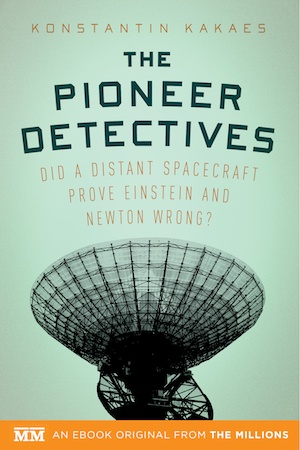
I published a short book with The Millions.
It's the story of the Pioneer Anomaly, a long-standing mystery. The book is short and fun—the length of a novella—but also, in the words of Amazon's reviewer, "powerful and sad". If you've got any curiosity about how NASA works behind the scenes or why scientists believe what they do, I think you'll enjoy the book.
It is available on Amazon as a Kindle Single and also on Apple's iBooks.Drone Wars
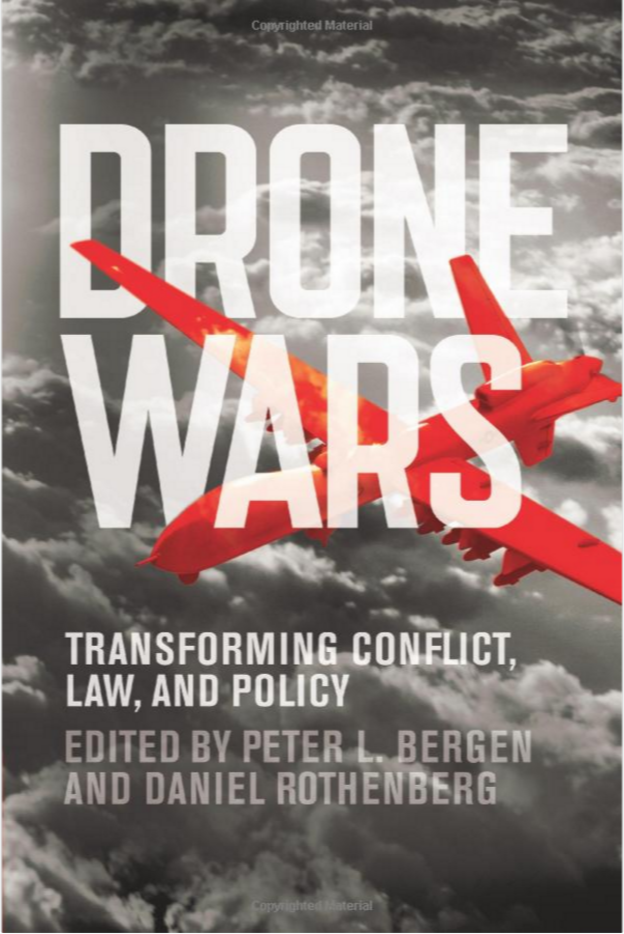
I wrote a chapter on the long history of drone technology going back to the early 20th century in this edited Cambridge University Press volume.
Atomic Dogs
28 September 2011
Why can’t the world’s nuclear energy watchdog do anything about Fukushima or Iran’s weapons program?
A report from Vienna
[Foreign Policy]
The Philosopher-Fisticuffers
14 September 2011
A review of Enrique Krauze’s new book Redeemers
Which consists of 12 profiles of Latin American figures, and is a good read.
[Zocalo Public Square]
Salvaging space
1 September 2011
Cleaning up low-Earth-orbit debris might lead to new space technologies.
Why problems are sometimes useful to have.
[Slate]
Weapons in space
16 August 2011
The future (and past) of weapons in space–the vulnerabilities of satellites and the difficulty of banning weapons
An in-depth report, for purchase or subscribers.
[CQ Global Researcher]
China’s innovation policy is all wrong
21 July 2011
But can the Chinese government come up with a new one?
Why China’s current innovation policy does not promote innovation
[CNN Global Innovation Showcase]
Ranking Countries on Innovation
4 July 2011
Why it doesn’t work very well
The flaws in a recent INSEAD study
[CNN Global Innovation Showcase]
If Mexico Were a Movie
1 June 2011
Uncle Sam Would be the Villain
How the US has undermined Mexico’s development
[Zocalo Public Square]
Mexico
tags: mexico, Zocalo Public Square
Krugman ought to know better
10 May 2011
In a blog post, Paul Krugman derides Alan Simpson for spreading “zombie lies”, in particular the statement that life expectancy when social security was enacted was only 63. Krugman quickly says: “life expectancy at age 65, which is what matters, was almost 80 for women and 78 for men.” But life expectancy at 65 is not the only thing that matters—if we’re trying to keep the system solvent, the proportion of people who live to age 65 to begin with compared with those in the workforce is important. Life expectancy at birth is a proxy for this. Krugman’s smart enough to know this.
weblog
tags: Paul Krugman
Publication and Raymond Davis
14 March 2011
Raymond Davis’s case was returned to a lower court by a Pakistani court of appeals today. The appeals court refused to rule on whether or not he has diplomatic immunity. The New York Times, and other American publications, initially held back reporting that Davis is a CIA contractor after he shot and killed two people on January 27th. The Times’s ombudsman explained that decision here, explaining that the paper didn’t want to repeat charges that had been made in the Pakistani press. The Times all but spelled out that Davis was a spy, saying, “his exact duties have not been explained, and the reason he was driving alone with a Glock handgun, a pocket telescope and GPS equipment has fueled speculation in the Pakistani news media.” That sentence says, without saying, that Davis was not, shall we say, a desk jockey. Continue reading
Another bus will be along shortly….
10 March 2011
I know it doesn’t launch for over a month, but NASA plans to move Endeavour to the launch pad tonight. Just made me think that if the shuttle program really had been like this (Discovery landed yesterday) with one shuttle taking off as soon as the previous one landed (the original idea was for a launch a week!) we’d be seeing a very different world in space. Of course, it was clear that it would never have worked. An excuse to link to Gregg Easterbrook’s famous, and awesome 1980 story.
Can we stop the David Broder hagiography before it starts?
9 March 2011
I suppose not. Much like when Tim Russert died, the encomia come in quick and heavy, the deceased being by all accounts basically nice and decent men, friends of and to the establishment. But this makes neither of them into more than perfectly good conveyors of consensus. There’s no shame in that, particularly, but let’s not make either into more than they were. Continue reading
weblog
tags: David Broder, Obituaries
The fallacy of constant numbers
9 March 2011
Apropos of the New York Times article about a lawsuit in Brooklyn over bicycle lanes, John Cassidy writes in support of the lawsuit, which claims that the city’s addition of bike lanes is “arbitrary and unfair”. Cassidy’s argument is that the bicycle lanes make it easier to bike, and harder to drive (and park). Well, yes. That’s precisely the point! He takes us on an idyll of youthful hungover bicycling, returning to his house shaking. Now, he says dismissively, “cyclists want it easy.” Again, is it evidence of some slothful decline of the west that bicyclists lobby to make cycling easier? Continue reading
What Engler missed
1 March 2011
So I’m at a conference on the future of energy, and John Engler, president of the Business Roundtable and former governor of Michigan, was talking. He was speaking about the need for better education and a better workforce when he said the following:
“Sometimes if you’re going to go from laboratory to commercial, who are the technical people who are going to work in that high tech environment with the proper controls–the right statistical and analytical ability to make sure this is not, uh, you know, reducing errors, this is zero error, zero tolerance for error, manufacturing has to get it right and that takes skilled people.”
Now, “technical people” with the right “statistical and analytical ability” would know that aiming for zero error in a manufacturing process is a very silly and costly thing to do. At some point, catching the marginal error is going to take more effort than it is worth, in time and money. It doesn’t take super-advanced training in probability theory to see this. Making a mistake like this in quite literally in the same breath as calling for better education I suppose proves his point, but not in the way Engler intended.
weblog
tags: John Engler, Statistics
Found in translation
22 February 2011
Translation by the numbers
How statistical machine translation evolved to work as well as it does
[Washington Post]
Dear Barnes & Noble Copywriters:
8 February 2011
“Fall in Love with a New Book and Save 30%” is a really terrible subject line in an e-mail. Falling in love with a book is ipso facto a great and heady intellectual adventure. Saving 30% can be satisfying too. (I’d rather pay 70 cents for that orange juice than an even buck, sure.) But something as [melo]dramatic as falling in love shouldn’t be, even in your sales pitch, put in the same breath as a reasonably good sale. It’s like a guy telling his best friend he just met this wonderful girl he wants to marry because he realized she’s a cheap date.